Force carbonating your keg of beer takes a few specialized pieces of equipment.
 For
home
brewing, we recommend using a typical 5-gallon cornelius, or corny, keg. The wide opening makes these kegs super easy to clean and fill. They’ve been used by homebrewers worldwide for years and are the gold-standard for kegging homebrew beer. On top of the corny keg, here’s what else you’ll need to carbonate your beer:
co2 tank and regulator
the most important part about force carbonating is the co2 itself. This gas will be forced into your beer to make it nice and bubbly. Typical co2 tanks come in 5, 10, or 20 lb volumes.
For
home
brewing, we recommend using a typical 5-gallon cornelius, or corny, keg. The wide opening makes these kegs super easy to clean and fill. They’ve been used by homebrewers worldwide for years and are the gold-standard for kegging homebrew beer. On top of the corny keg, here’s what else you’ll need to carbonate your beer:
co2 tank and regulator
the most important part about force carbonating is the co2 itself. This gas will be forced into your beer to make it nice and bubbly. Typical co2 tanks come in 5, 10, or 20 lb volumes.
Chapter 2: the ingredients of beer chapter 3: primary beer styles chapter 4: brewing your own beer getting set up view video on beer brewing equipment chapter 5: sanitization view video on cleaning and sanitizing brewing equipment chapter 6: the brewing process view video about the brewing process chapter 7: the bottling and kegging process view video on cleaning and sanitizing bottles view video on the bottling process view video on cleaning and sanitizing kegs view video on the kegging process chapter 8: enjoying your beer chapter 9: conclusion other resources.
You can never have too much home brewing equipment! we stock all of the beer brewing supplies you need for your home brew setup. Take your recipe from brew kettle to beer keg with our wide selection of beer brewing equipment. Easy to use home brewing starter kits help you learn to brew it yourself. As you advance in the brewing process, trust that you will find the beer making supplies you need for your latest home brewing adventures. Whether you're looking for a propane burner, wort chiller , a new hydrometer, or any other beer supplies, we have home brewing equipment for all types of brewers.
Posted by ron on 1st jun 2021 if you want to know how to brew your first beer, we have the right information and some motivation to get you started right away! we’ll talk about the ingredients and equipment you need for proper homebrewing and give you a brief step-by-step guide. You will be amazed at how easy and affordable homebrewing is. In fact, you may even regret the fact you hadn’t started doing it earlier.
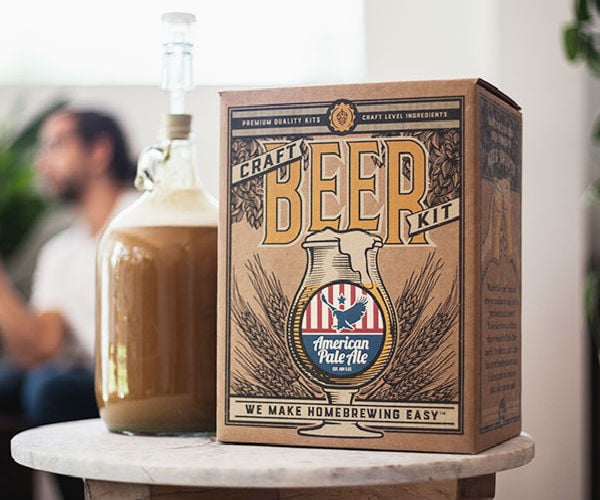
What's in a Beer Making Kit
Before you bottle your beer, you need to be sure that you’re carbonating beer not making bombs. Make sure you have a stable specific gravity reading using a hydrometer or refractometer. When you think your beer is done fermenting, check the specific gravity. Then check it again after a couple days.
 If the reading is the same both times and it’s at or within a couple points of your predicted final gravity, it’s time to bottle.
Introduction brewing your own beer is rewarding, and not difficult. Just a few simple steps and some attention to detail can start you on the path to homebrewing great beer. Brewing requires boiling a liquid made from malt and water (called “wort”), adding hops and finally yeast to the cooled mixture. After the yeast ferments this wort, a process that usually takes 10-14 days, the finished beer is bottled with a precise amount of sugar for carbonation, and allowed to rest for two weeks or so. Some will start with a 1 gallon (3. 79 liters) beer kit to begin, but most people will start with a 5 gallon (19l) sized batch.
If you’re making beer, then you need to be rigorous about cleanliness during the brew. Vwp is an absolutely no-nonsense cleaner and steriliser for getting everything ready beforehand. During the brew, a no-rinse sanitiser is invaluable. Between the two, spoilt and infected beer shouldn’t be a problem. You can buy cleaning products online from brew store and the malt miller.
Empty the can of malt into the brewing bucket. This is normally best done by immersing the can in hot water to soften the malt which makes it easier to pour out. Then rinse the can with hot water to remove any remains. Depending on which kit you are making it might be necessary to add some brewing or granulated sugar. The best kits will be all-malt and won't need any additional sugar. Top up the volume with water. This should be designed to give a final temperature reading in the bucket of around 25°c. Stir the mix well.
Ingredients of Beer Making
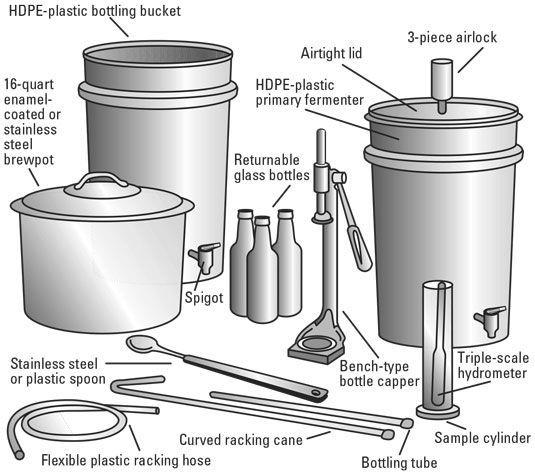
Once you have your ingredients, you’ll need a few essential tools to brew beer at home. You likely have some of these items already! for everything else, there’s our 1 gallon beer making kit , which equips you with all the essential equipment to brew and ferment your very first batch of beer. You don’t need a sophisticated set up to brew your own beer, you just need a few items to get your first beer started: you may already have:.
Homebrewing beer is a hobby virtually everyone can enjoy because it is entertaining and rewarding. Brewing great beer at home is deceptively straightforward: mix malt, hops, water, and yeast. However, in order to come up with one-of-a-kind tastes and kinds of beer, there are a number of various ways that the ingredients and brewing method can be altered. For instance, you can develop a wide range of flavour profiles by utilising a variety of malts, hops, and yeast strains in your brewing process. Altering aspects of the brewing process, like the temperature and length of time spent fermenting the beer, can also produce wildly divergent end products.
One of the best parts of making beer at home is being in control of the recipe. As a homebrewer, the sky is truly the limit when it comes to the style and ingredients you wish to pursue. For your first batch, it can be best to pick a tried-and-true recipe to set you up for success. Homebrewersassociation. Org has a collection of proven beer recipes, including small-batch versions of some of our favorite commercially available craft beers. Brew up your own bell’s two hearted ale and see how it stands up to the real deal! once you get a few batches under your belt, you’ll begin to understand how to incorporate different ingredients and tweak to what you scheme up.
Transfer the Wort to the Fermenter
Yeast converts sugar into carbon dioxide, fermenting the wort. Filters, funnels and strainers a funnel easily transfers wort into a fermenter and fermented beer into bottles or kegs. Some brewers want to separate sediment that develops during the boiling process. In such cases, they use a stainless-steel strainer along with the funnel to filter out the dregs.
Step 1: heat the water to the desired temperature and add the malt extract. Step 2: mash the grains and malt extract to extract the fermentable sugars. Step 3: boil the wort and add hops, depending on the desired flavor and bitterness. Step 4: chill the wort and transfer it to the fermenter. Step 5: add yeast and allow the beer to ferment for several days. Step 6: transfer the beer to bottles with priming sugar to carbonate. Step 7: allow the beer to carbonate for several days, and then enjoy your delicious homebrew! home brewing can be a complex process, but with some practice and patience, anyone can brew beer at home.
All grain brewing is the most expensive and complex form of making beer at home. It does however; give you total control over the beer style and flavour. If you know what you are doing any beer style (even ones you invent yourself) are within reach. All grain brewing involves taking malted grain and converting the starch into sugar by soaking the malt in warm water – this is called mashing. Typically base and specialty malts are combined to make a style of beer. Following mashing the malted grain is sparged with hot water to ensure all of the sugars are extracted into a sugary liquid is called the wort (pronounced ‘wert’).
Let the Wort Ferment
Pre-hopped malt extract[ sometimes known as beer in a can, no-boil and hopped wort ; these beer kits contain liquid malt extract that has already been boiled with hops to introduce bitterness and flavor. Pre-hopped kits simplify the brewing process by removing the need to add hops at specific times during the boil. Some kits may not require a boil at all, though this may increase the risk of off flavors in the resulting beer due to contamination from bacteria and wild yeasts. Malt extract[ brewing in a bag[ brewing in a bag (biab) is a technique that involves a single brewing vessel, a fine mesh bag to hold the grist (crushed malt/grain), and a single heat source.
Sanitize fermenting equipment and yeast pack remove the hops and add the cooled wort to the fermenter, leaving any thick sludge at the bottom of the pot - if necessary, pour in extra pre-boiled water to reach desired volume seal and rock fermenter for a few minutes to mix and aerate wort (*note: before doing this, make sure the side of the fermenter is not warm to touch) uncover the fermenter and add the yeast fill the airlock with sanitizer and insert into the stopper move the fermenter to a dark, quiet spot take a break, have a beer, and clean up after 10-20 days, fermentation should be complete.
Mashing: this step involves steeping crushed grains in hot water to create a sugary liquid called wort. The type of grains you use will influence the flavor and color of your beer. Boiling: after mashing, you'll bring the wort to a boil and add hops for bitterness, flavor, and aroma. Hops are a critical ingredient in beer and contribute to its complexity. Fermentation: once the wort is prepared, it's transferred to a fermentation vessel and yeast is added. Yeast is responsible for converting the sugars into alcohol and carbon dioxide. This is where the magic happens, and your beer develops its unique character.
Distilled water is a type of water that has been boiled to steam and then condensed back into liquid water. Distillation removes all the minerals and contaminants from water, so it is just about as pure as you can get. But that doesn’t make it great for brewing. Minerals are essential to the taste and mouthfeel of your beer, and some are important for fermentation, so you don’t want to use distilled water in all-grain brewing. Some brewers like to use distilled water when extract brewing because the extract is essentially condensed wort, and the water quality work has already been done.



No comments:
Post a Comment